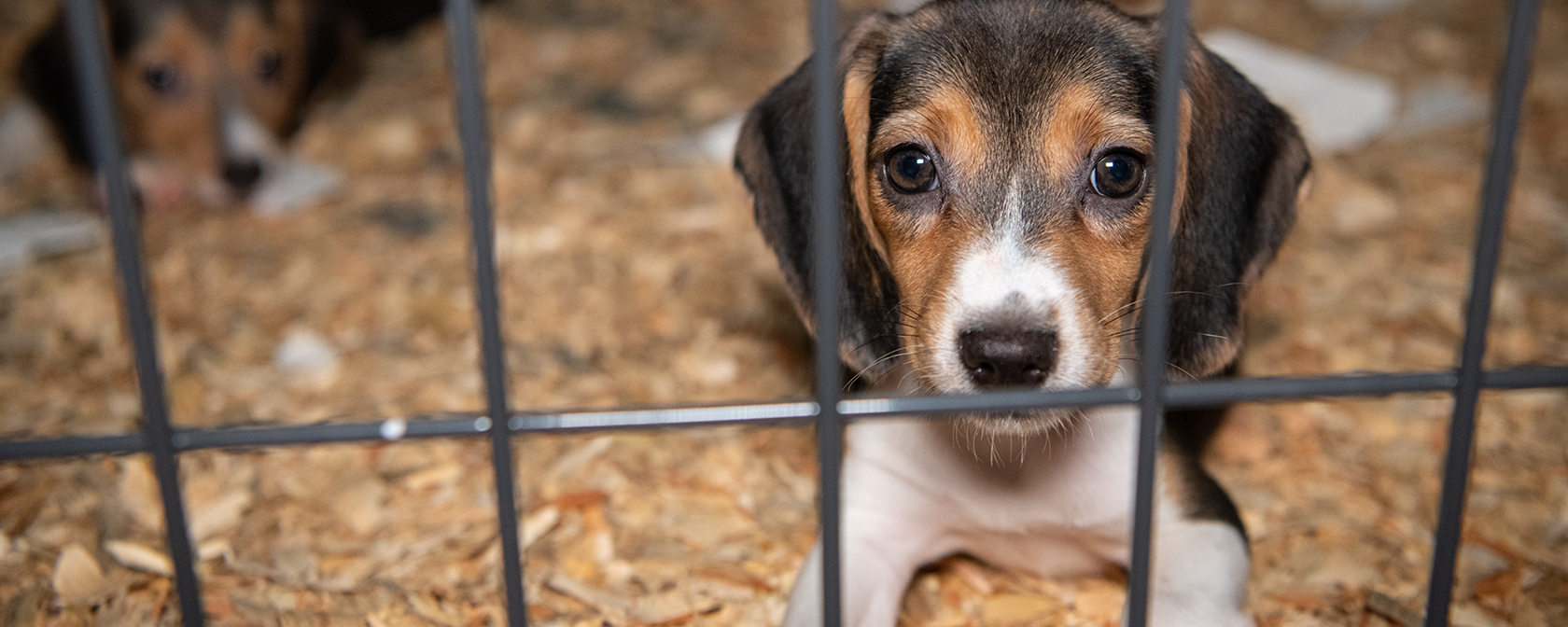
The 2026 Maryland Humane Scorecard is now available online. As this scorecard reveals, Maryland continues to prove its mettle as a leader in animal protection policy.
Several pieces of humane legislation passed with bipartisan support, including the landmark Animal Research Modernization and Best Practices Act (SB 423/HB 666) which, among other things, requires the use of non-animal tests instead of live animals when those tests validated and approved by federal agencies. Other bills addressed consumer protection interests in relation to pet cremation and burial services, civil liability issues tied to the donation of pet supplies, and management of endangered and threatened species of migratory birds.
Humane World Action Fund urges Marylanders to review the 2026 Maryland Humane Scorecard, gauge how their representatives voted, and take the scorecard with them to the ballot box on June 23rd. When animal advocates show up, we build pro-animal majorities able to enact policies that take us still further in our efforts to end animal cruelty.
Using the Scorecard
This year’s Maryland Humane Scorecard includes bills that were considered by the Maryland General Assembly. Here is a list of each bill and how to read the scorecard.
- Animal Research Modernization and Best Practices Act (SB 423/HB 666): The bill requires laboratories testing chemicals, drugs, pesticides, and other products to replace animal experiments with approved non-animal alternatives once those alternatives are accepted by the federal government. It also requires research and testing facilities to report the number of dogs and cats used in experiments and adopted out after their use to the Department of Agriculture on an annual basis. Colleges and universities will also be required to submit federal inspection results to the General Assembly. Sponsored by Sen. Ben Kramer (D) and Del. Bonnie Cullison (D).
- Immunity From Liability – Donation of Pet Supplies (SB 314): The bill provides liability protection for anyone donating or distributing donated pet items. Sponsored by Sen. Jeff Waldstreicher (D).
- Pet Cremation and Burial Services Consumer Protection Act (HB 564): The bill requires pet cremation providers to disclose cremation options— private or communal— and certify the remains to ensure transparency. It also sets record-keeping standards and enforces consumer protection rules for greater accountability. Sponsored by Del. Nick Allen (D).
- Endangered and Threatened Species of Migratory Birds (SB 431/HB 578): The bill updates the management protocols for endangered and threatened species in the state by requiring periodic regulatory review, adjusting criteria for listing decisions, and allowing delisting when conditions are met. It also outlines petition requirements, permits designation of essential habitats, and prohibits the taking of certain migratory birds. Sponsored by Sen. Benjamin Brooks (D) and Del. Julie Palakovich Carr (D).
- Private Possession (HB 53): The bill expands the list of exotic animals prohibited for private possession in Maryland to include kangaroos, zebras, wallabies, and wallaroos. Sponsored by Del. Mary Lehman (D).
About our methodology
Humane World Action Fund acknowledges the limitations of judging legislators based on a few votes on animal issues, however important those issues may be. In some cases, legislators must miss votes for unavoidable reasons, such as a death in the family, serious illness, birth of a child or emergency in their district. Additionally, some bills may have good intentions but include problematic language or have unintended legal consequences.
There are also many potential reasons why a legislator votes a certain way— even more reason for you to engage with elected officials directly and ask them about their positions. Finally, in assessing the record of your representatives, and your strategy for engaging them in the future, you should consider unrecorded matters such as committee participation and performance, House or Senate leadership posts, constituent engagement and responsiveness, and other animal protection bills not included in this scorecard.
The full 2026 Maryland Humane Scorecard, and scorecards from previous sessions, can be found online at humaneaction.org/state-scorecards.
As Maryland’s primary election day approaches, Humane World Action Fund urges Marylanders to review the 2026 Maryland Humane Scorecard, share it with other folks who care about animals, and encourage them to make sure that they too are ready to vote on June 23rd by visiting our elections center. Together, we can elect and reelect humane champions and make an even greater difference for animals.