By Sara Amundson and Kitty Block
Last week, President Trump issued a new executive order directing federal agencies to expand hunting and permit the use of lead ammunition and fishing tackle on public lands. The order is called: “Reinvigorating America’s Hunting Heritage.”
And it is a farce.
Make no mistake: This is all part of this administration’s wider war on wildlife.
This latest move comes right on the heels of another attack on the Endangered Species Act, and it could lead to, indeed, a “reinvigorated” hunting of animals such as wolves, bears and mountain lions on public lands. It could also result in the spread of lead in sensitive ecosystems and habitats, a toxicity that harms everyone, people included.
The executive order operates on a false premise—that hunting helps conservation, and so loosening hunting restrictions is good. Let us disabuse anyone of the notion that this is true:
1. Lead is dangerous to animals and humans at any level.
First, it is nothing less than absurd to take steps backward on lead ammunition and tackle. Because of the wide acknowledgment of its toxicity, lead has been removed from gasoline, pipes, housepaint and many other common products. The restrictions on lead ammo and tackle that exist are there for good reason.
More than 130 species of wild animals have suffered from the effects of lead poisoning from spent lead ammunition and fishing tackle. Lead poisoning is one of the leading causes of death for bald eagles and California condors. Raptors ingest lead ammunition fragments left behind by hunters or the carcasses of animals that hunters shoot but don’t recover. In birds, a single ingested shotgun pellet or bullet fragment is sufficient to cause brain damage, impairing critical neuromuscular, auditory and visual responses. Often, the ingestion results in death. Poisoned animals who survive often experience long-term negative effects that make them more susceptible to predation and dangers such as car collisions.
And of course, a human child exposed to lead can suffer from all kinds of health and developmental problems—which is why it’s common practice for pediatricians across the U.S. to screen children for lead exposure.
So, why would we take steps backward and sanction the use of lead in ecosystems?
2. Ridiculous: Killing some animals to boost numbers of other animals for hunters to kill.
The executive order says that “The Secretary of War, the Secretary of the Interior, and the Secretary of Agriculture shall coordinate with State agencies to align management practices and conservation plans to promote the growth of game species populations through the… targeted management of predators, competing species, and other population-limiting factors.”
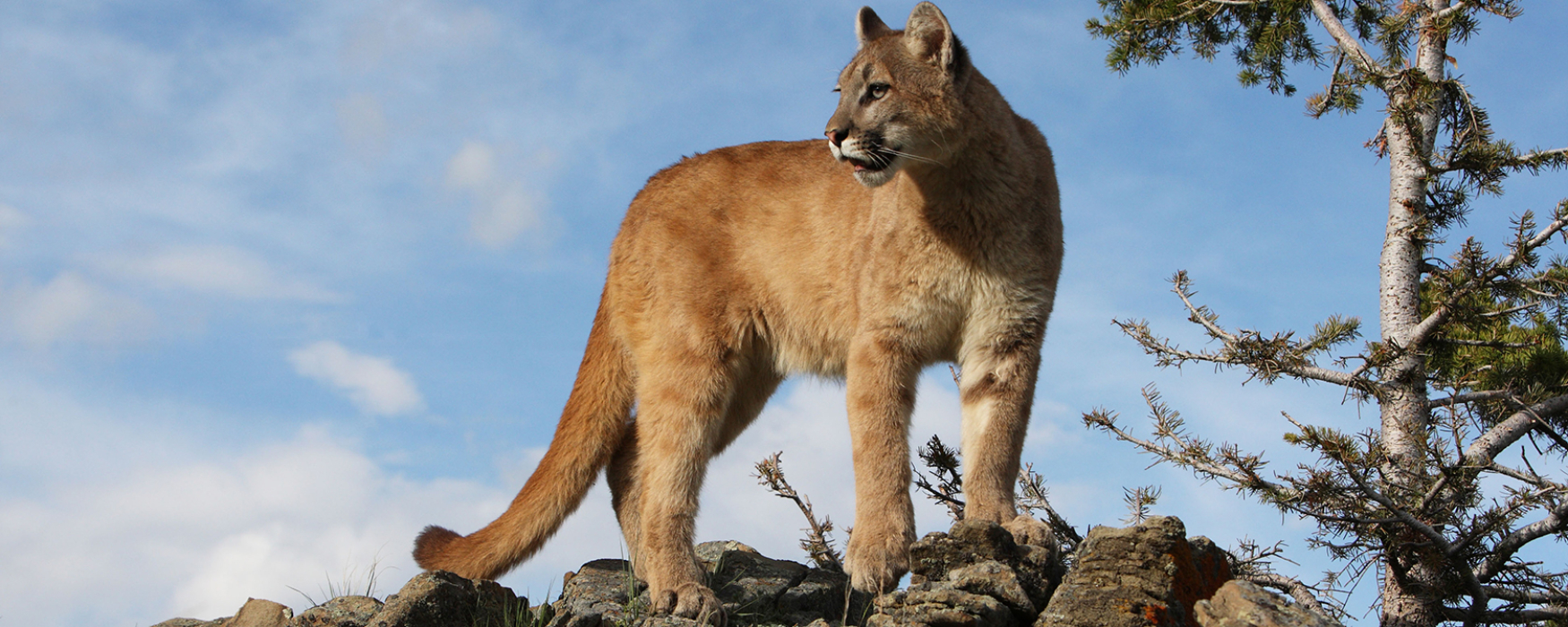
The “targeted management”—the killing—of wild carnivores (such as grizzly bears, black bears, wolves, mountain lions, coyotes, bobcats and foxes) for the purpose of increasing populations of game species (such as deer, elk and moose) is a ridiculous plan.
It’s been proven that predator control schemes do not work, in part because populations of deer, elk and other game species are affected by many environmental factors. So, killing wild carnivores to grow other species will not increase ungulate herd sizes, but will only cause pain and suffering, shattering family social structures (when a wolf pack loses even one breeding member, for example, the whole pack can disintegrate leaving orphaned pups) and wreaking havoc on ecosystems.
Recently, Utah, Nevada and Oregon have killed dozens of mountain lions and coyotes in an attempt to augment bighorn sheep herds. Bighorn sheep populations are in decline because of historic overhunting, and now the animals are facing debilitating diseases which have been spread from domestic sheep.
And Alaskan officials are killing dozens of brown bears annually too, to ostensibly help flagging caribou herds, who are harmed by a warming climate.
As if that weren’t enough to ardently oppose this approach to “wildlife management,” the methods used to kill these wild carnivores are often the height of cruelty; steel-jawed leghold traps, strangling neck snares and packs of hounds are just some of examples.
3. Increased hunting will not bolster the economy. Wildlife watching is more popular and economically significant than hunting.
Wildlife watching reaches a much broader public than hunting and generates substantially greater economic activity, too, according to the federal government’s own data.
- In 2023, the U.S. Fish and Wildlife Service reported that 145.3 million people watched wildlife in 2022, compared with 14.4 million who participated in hunting—that’s roughly ten wildlife watchers for every hunter. In 2022, wildlife watchers spent over $250 billion, while hunters spent over $45 billion. Wildlife-watching expenditures were more than five times higher than hunting-related expenditures.
- In 2024, visitors to national parks spent an estimated $29 billion in local gateway regions, supporting jobs, labor income, value added and broader economic output.
- In 2024, the total outdoor recreation spending reached just over $540 billion with hunting and trapping accounting for only 1.24% of that total, according to the Bureau of Economic Analysis.
These federal sources show that wildlife watching is not only more widely practiced than hunting, but also a larger driver of outdoor recreation spending and local economic benefits. Only 4.6% of Americans hold a paid hunting license in 2026, according to governmental data. Contrary to the myth that hunters pay for wildlife, the truth is that wildlife watchers subsidize hunters.
Public lands belong to all of us
Americans value living wildlife and natural places. America’s public lands encompass hundreds of millions of acres and provide a home to thousands of wildlife and fish species. Nearly half the land in the American West is publicly owned and federally managed. These lands are not a private playground for special interests; they are a shared national trust, and they should be managed in ways that sustain healthy ecosystems.
If the government is meant to represent the interests of the American people, then it should listen to the American people and invest in science-based conservation that protects biodiversity, reduces lead contamination and ensures wild animals can thrive.
Five ways you can help wildlife right now
- Urge your lawmaker to vote NO on the misleadingly named Pet and Livestock Protection Act, legislation that would put wolves in the crosshairs.
- Tell the U.S. Fish and Wildlife Service to keep grizzly bears protected.
- Tell the U.S. Fish and Wildlife Service to maintain protections for wolves.
- Add your voice to calls to maintain key provisions in the Endangered Species Act.
- Sign the pledge to end trophy hunting.
Kitty Block is CEO and president of Humane World for Animals.