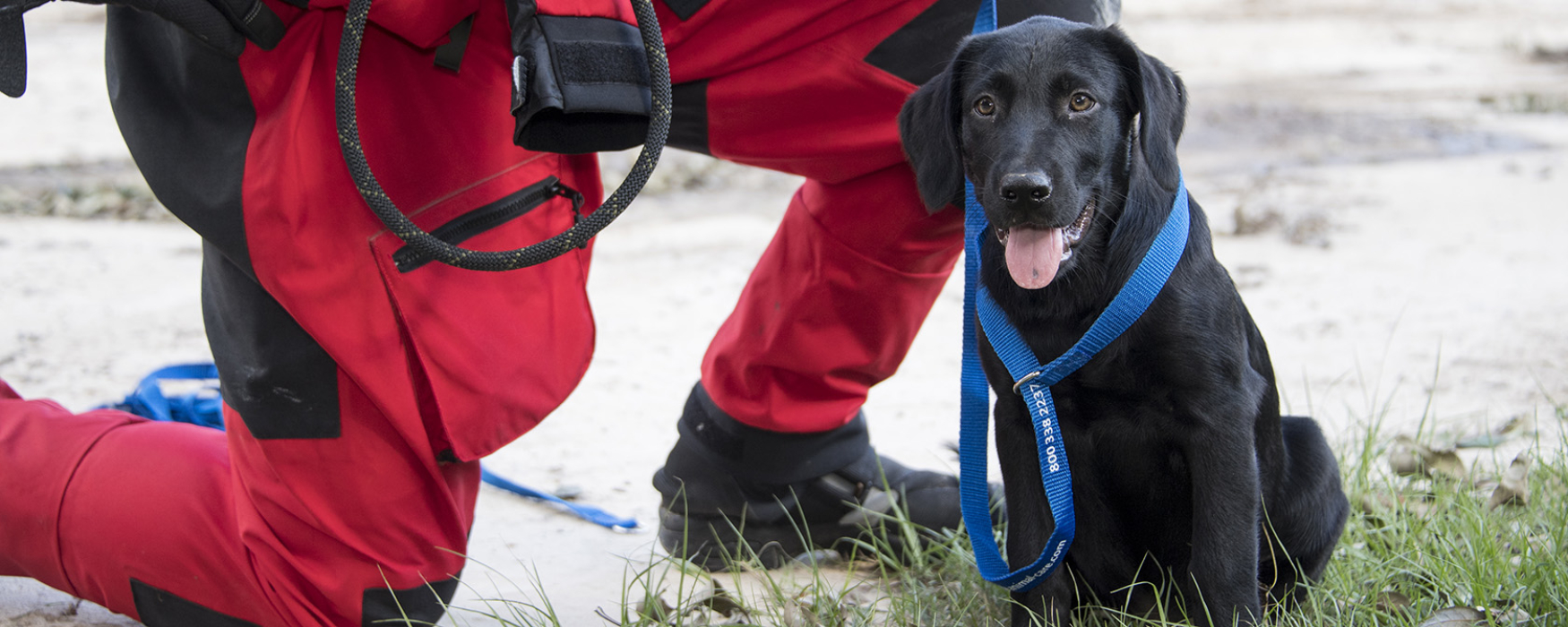
Twenty years ago, Hurricane Katrina revealed a devastating gap in America’s disaster planning: People may choose not to leave emergency situations if they cannot bring their pets with them.
I was there as a responder, at Lamar-Dixon, the holding area for several thousand pets rescued by boats and other means from the flooded districts in New Orleans. It was a chaotic and anxious time for the families seeking to be reunited with their pets, and the broader response, without precedent in our nation’s history, involved a rotating list of professional rescuers and volunteers from across the country. That spotlight became the impetus for significant congressional action.
Before Hurricane Katrina, most evacuation plans simply did not account for family pets, leaving people without safe options. Some individuals stayed behind rather than abandon cherished animals who were part of their families. Others were forced to evacuate without them, with heartbreaking consequences: thousands of animals were left stranded, separated from their families or trapped in flooded communities. Many were never reunited with the people who loved them and many did not survive.
The landscape has changed now because of the public policy response we launched in the aftermath of that historic disaster.
In response to Katrina, Humane World for Animals, formerly the Humane Society of the United States, launched the largest disaster response in its history. Response teams worked across Louisiana and Mississippi and ultimately rescued 10,000 animals. Staff responders helped move animals to safety, provide shelter and reunite pets with their families whenever possible.
But we knew that there was more—much more—that we could do. In the year that followed, the Humane Society Legislative Fund, now Humane World Action Fund, helped lead the effort to turn those lessons into legislative action. We leveraged the tragic legacy of Katrina to lay the foundation for a better approach to animal-related disaster work and to disaster preparedness and response efforts in general.
The PETS Act produced essential improvements in protection for cherished animal companions
On October 6, 2006, President George W. Bush signed the Pets Evacuation and Transportation Standards Act, or PETS Act, into law. The PETS Act enjoyed solid bipartisan support and particularly benefitted from the strong support of Senator Ted Stevens (R-Alaska), who generally did not vote our way on animal-related legislation.
There was real wisdom in the approach taken by Congress in framing this measure, which incentivizes institutional commitments to animal-related disaster planning. The law requires state and local emergency preparedness agencies to implement plans to account for the needs of people with household pets and service animals as a condition of receiving certain federal disaster assistance. It also gives the Federal Emergency Management Agency authority to support pet evacuation, rescue, sheltering and care during federally declared disasters.
We have a long way to go in securing the universal engagement of planning agencies across the nation, and worldwide, with animal-related preparedness and response. But today, with Katrina's lessons well learned, communities actively seek the support of animal organizations in developing appropriate disaster preparedness and responses with an animal-related component.
Planning and preparedness for animals in disaster makes a difference
Disasters over the past 20 years have repeatedly shown how and why this lifesaving work matters.
After Hurricane Helene devastated communities across the Southeast in 2024, Humane World for Animals sent response teams to Florida and Tennessee. Responders provided veterinary services, pet food and supplies. They also transported animals out of damaged and overcrowded Tennessee shelters, creating space for animals displaced by the storm.
Wildfires bring different dangers but many of the same challenges: families evacuating on short notice, animals separated from their people, and local shelters and emergency agencies suddenly facing enormous demands. Humane World for Animals has supported animal response to major fires for years. During the January 2025 Southern California wildfires, the organization's Animal Rescue Team worked with California and Los Angeles-area emergency management and animal welfare officials as communities faced widespread evacuations and urgent needs for animal rescue, shelter and care.
Nor has Congress stood still in this area of concern. It took another positive step in 2022 with the bipartisan Planning for Animal Wellness, or PAW, Act, which directed FEMA to convene emergency officials, veterinarians, animal welfare organizations and other experts to identify effective approaches for helping animals in disasters and ways to improve federal guidance.
Today, two decades since Hurricane Katrina struck the Gulf Coast states, we’ve made great progress in animal-related disaster response globally. Frontline responders, emergency managers, veterinarians, animal shelter and state and local disaster coordinators now know far more about what works—and what breaks down—when people need to evacuate with animals. Their experiences can help answer practical questions about shelter capacity, transportation, veterinary resources, public communication, animal identification and reunification. Their assessments and their interactions with citizens at the community level can also show whether communities have the resources and plans they need in place before disaster strikes.
Now is not the time to roll back planning for animals housed in federally regulated facilities
The PETS Act works when families are able to safely evacuate with their animals and responders have the tools and coordination they need to protect lives during a disaster. But disaster threatens other animals in need as well, and the same spirit of humane commitment and planning must extend to animals housed in federally regulated facilities.
Dogs caged in puppy mills, rabbits used in animal research and tigers displayed in roadside zoos—all of these animals and more are completely at the mercy of humans and the protections that may be afforded to them under the law.
These animals may not have families to cherish them, but they are no less deserving of safety and basic care. At a minimum, we owe them protection from life-threatening emergencies and disasters.
Under current law, regulated facilities are already required to prepare for such emergencies involving the animals in their care. Required plans address practical questions such as whether to evacuate or shelter in place, how to maintain access to food, water and veterinary care, and which staff members are responsible for carrying out the plan.
Now, however, even as we mark the 20th anniversary of the PETS Act, the Trump administration is preparing to remove these commonsense requirements. This could lead to devastating outcomes for countless dogs, cats and other animals— and people. When facilities holding animals have not planned for emergencies, animals can face greater danger and local first responders and emergency officials may be left to solve preventable problems in the middle of a crisis.
Hurricane Katrina showed the consequences of failing to include animals in disaster plans and spurred passage of the PETS Act. Two decades later, the experience of responders and communities across the country should help us build on that progress, strengthen preparedness and ensure that animals in other contexts, like puppy mills, laboratories and roadside animal exhibition facilities, are taken account of in disaster planning.
In recent months, USDA has taken several positive actions to safeguard animals under the AWA. It would undermine such progress if the administration removed its current disaster planning requirements for animals in regulated facilities. In such a basic matter of concern for animals and their welfare, there can be no going backwards.