By Sara Amundson and Kitty Block
The U.S. Department of Agriculture just proposed increasing or altogether eliminating speed limits for slaughter lines, which puts animals, workers and the public at risk. Accelerated slaughter line speeds are nothing less than a recipe for cruelty and chaos. Faster speeds risk horrific cruelty to animals and put workers at higher risk of debilitating injuries, all while compromising food safety.
The next time the National Pork Producers Council, the American Farm Bureau Federation, the North American Meat Institute and the other factory farming trade organizations publicly claim that they know what’s best for animals and people—whether it involves Proposition 12, industry price-fixing, bird flu prevention or anything else—take a look at their position on slaughter line speeds.
Tell the USDA to abandon its dangerous rule on slaughter line speeds!
To state the obvious, the abuses of industrial animal slaughter in the 21st century are scandalous, combining horrendous animal cruelty with merciless disregard for the physical safety and psychological well-being of the people hired to kill the animals, and no regard whatsoever for public morals and public health.
It is remarkable that even within the context of such vast moral failure, the factory farming industry can still shock and offend. There is no more trenchant proof of this than its unabated push for accelerated slaughter line speeds, and its full-throated support for two rules just released by the U.S. Department of Agriculture. Capitulating to the industry falsehood that slaughterhouses are overregulated and inefficient, the agency will codify higher line speeds for chicken and pig slaughter plants and eliminate requirements for the submission of worker safety data.
Currently, at chicken slaughter plants, workers are expected to maintain an accelerated pace of 140 birds killed per minute, and while that’s bad, it’s not even the highest speed permissible. The USDA continues to renew COVID-era waivers that allow certain facilities to operate at speeds up to 175 birds per minute, and in March 2025 Secretary of Agriculture Brooke Rollins extended those waivers even as the agency was preparing the now-released rules on more permissive speed limits.
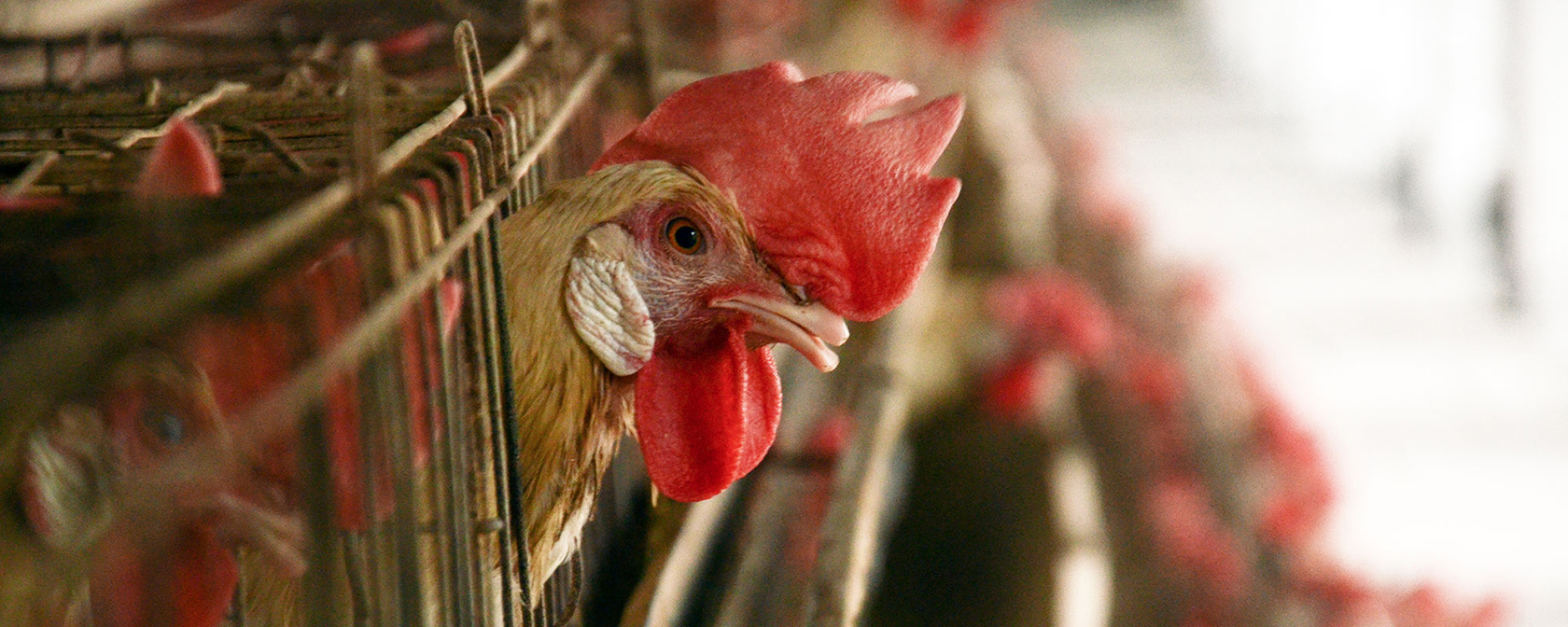
Chicken slaughter is as chaotic as it is cruel, with employees grabbing live birds, flipping them upside down and haphazardly shackling them to the evisceration line. If done improperly, as it often is under an already frantic pace, birds will move—while fully conscious—towards an automated throat-cutting blade. If they miss the automated blade, workers are supposed to cut their throats by hand. Rapid line speeds make it more difficult for workers to spot these birds, which leaves the animals at risk of being boiled alive in a scalding tank.
A massive number of animals are at risk—according to USDA data, over 9 billion chickens and 190 million turkeys were killed in 2025. Big Pork is greedy for speed, too, and the USDA has obliged with a proposal tailored to that demand—one that eliminates the existing maximum line speed of 1,106 pigs per hour.
As with chicken and turkey facilities, faster line speeds at slaughter plants for pigs could lead to greater cruelty and suffering, and even violations of the Humane Methods of Slaughter Act, under which pigs are explicitly covered.
These two new rules extend the USDA’s servitude to the meat industry, so evident in the shocking 2019 suspension of line speeds for the killing of pigs in slaughter plants and— at the height of the pandemic—its issuance of line speed waivers to chicken slaughter plants, even though many of them were COVID transmission hotspots. In the same period, the USDA also reduced the number of federal meat inspectors assigned to examine pig carcasses on the slaughter line and remove diseased and contaminated meat, shifting responsibility for these critical public health functions to pork plant workers employed by the slaughter plants.
Incredibly, these endless concessions by the USDA are not enough for the factory farming lobby. With the encouragement of agriculture leaders in both the House and the Senate, they’re meddling in Congress too, seeking to take the issue of line speeds away from the USDA altogether through federal legislation to set extreme chicken and pig slaughter line speeds by law rather than by administrative ruling.
Of course, the industry is ready to defend its position through truth-bending research and data interpretation. The meat industry rejoiced in early 2025 when the USDA stated that “extensive research has confirmed no direct link between processing speeds and workplace injuries” at pork- and poultry-processing plants, based on two separate studies that examined the effects of increased line speeds on poultry- and pork-processing worker safety, respectively. But it’s not so simple: While the agency concluded that increased line speeds in poultry- and pork-processing plants are not the “leading factor in worker musculoskeletal disorder risk,” it did determine that they combine with other factors to contribute to employees’ overall risk of negative health and safety outcomes. Researchers found that 81% of poultry slaughter plant workers and 46% of hog slaughter plant workers were at high risk of developing carpal tunnel syndrome, arthritis and other chronic conditions. In the end, the USDA studies implicitly make the very point the factory farming groups want to deny.
From one administration to another, whether Democrat or Republican, this situation has been bleak for a long time. Understanding the horror of mass-scale slaughter of animals for food, we’ve consistently advocated for federal policies to limit the pain, suffering and terror that animals face during the last moments of their short, miserable lives. In recent years, we’ve urged the USDA to not increase line speeds, by suing the Trump administration for issuing line speed waivers for chickens and by securing Congressional requirements to ensure the USDA reviews the impact of waivers granted for increasing line speeds.
Faster line speeds are terrible for animals and people. Big Pork and Big Chicken are hell-bent on maximizing their profits at the expense of animal welfare and human safety. That’s too great a price to pay.
Kitty Block is CEO and president of Humane World for Animals.