By Sara Amundson and Kitty Block
In 2022, we rejoiced when the federal Big Cat Public Safety Act passed in the U.S. with strong bipartisan support. We had championed that legislation for years, and the cultural zeitgeist of Netflix’s Tiger King, which so many people watched while under Covid-19 lockdown, revealed broadly the sad truths of the captive big cat industry that we and other advocates worked to expose for years, helping to build momentum to pass this historic law.
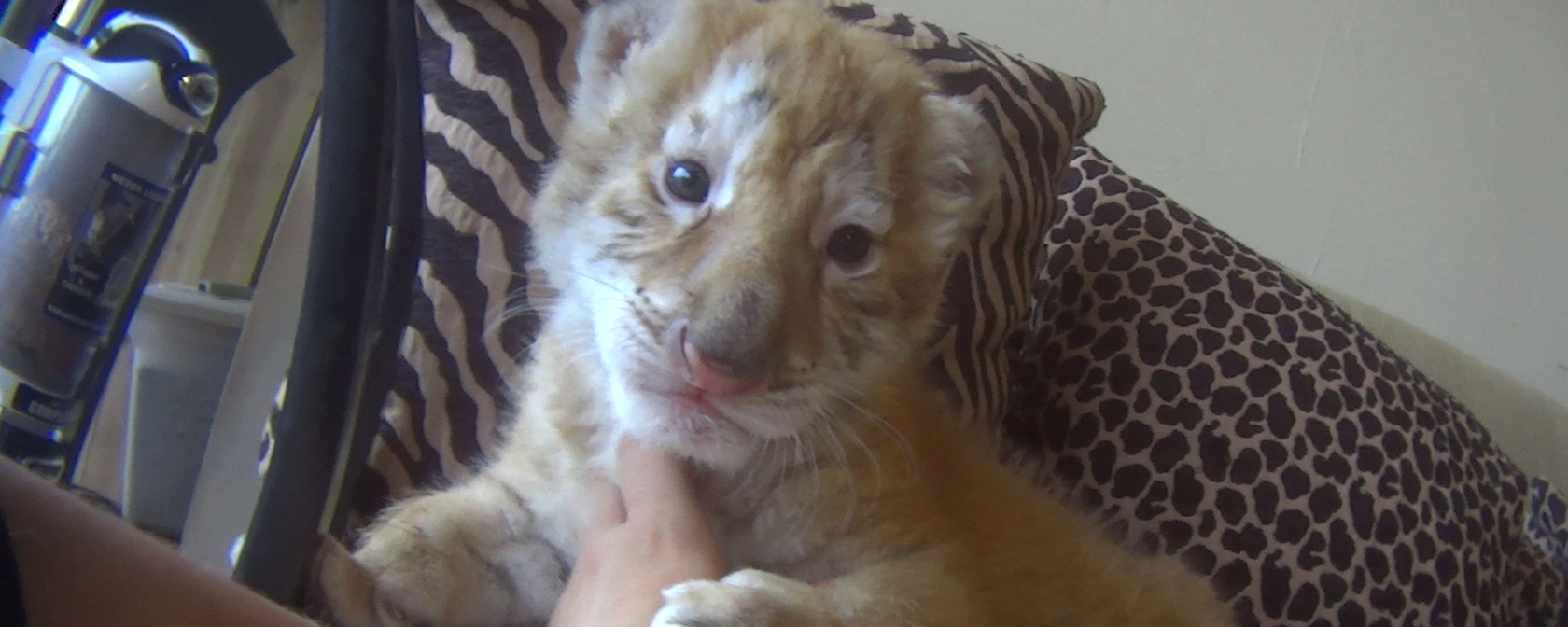
The BCPSA set limits on private ownership of big cats and banned cub petting, the attraction that generated so many tiger cub selfies across social media. This law has been a lifeline for wild animals. It protects big cats from the gross cruelty of being held captive as pets or handled by the paying public during forced, dangerous interactions that turn a profit and boost social media profiles.
Now, less than four years later, trade associations representing some of the worst of the institutions regulated by the BCPSA, many of them privately owned zoos and menageries, are launching an attack on the law.
You can sign this action alert to stand up for big cats.
Protect big cats >>
After we achieve wins for animals, we don’t just pack up and leave the table. Our work is so important precisely because we constantly defend and advocate for the progress we’ve already made. We advocate for the passage of humane laws, track them to make sure they're being implemented, funded and enforced, and when threats arise, we stand ready to defend this progress. This is to ensure that animal lives are really changed by what we do.
The threat posed by the ‘Protecting Local Zoos Act’
The Protecting Local Zoos Act is a bill whose very name implicitly suggests that it’s not the animals who need protection but the local zoos. And yet the name they’ve given this measure is also a ruse. The Protecting Local Zoos Act is not about protecting zoos as the sponsors want you to think. It’s a Trojan horse of loopholes that would open the door to the very abuse and cruelty that led Congress to pass the Big Cat Public Safety Act in the first place.
The bill would do little in the interests of zoos because the BCPSA did not affect standard zoo operations—it only restricted them from allowing the public to have direct contact with big cats. Instead, this bill would significantly expand the private breeding and international trade of big cats, increasing the risk of a lifetime of abuse, suffering and misery. Big cats don’t belong in backyards, basements, or the hands of untrained and unqualified individuals, and Congress should not turn back the clock on protections that save both human and animal lives.
Do we already need to recall everything that led to the passage of the BCPSA in the first place? Do we need to revisit the hundreds of human injuries and deaths resulting from direct contact with wild cats over recent decades? Do we need to recall again the escapes of wild animals from captivity that end in their bloody deaths? The risks borne by local law enforcement, first responders who came face to face with these animals in backyards and basements? Or, the immense costs shouldered by animal sanctuaries that have taken in animal victims of the big cat trade? Direct public contact with big cats and the private ownership of these kinds of animals is an outrage and an injustice.
Why now?
The common sense that led to the passage of the BCPSA appears to be lacking in some quarters of the Congress at this time. The Feline Conservation Foundation and the Zoological Association of America, an organization seemingly devoted to opposing or weakening all laws, regulations and accreditation requirements that protect wild animals in captivity, have found several elected officials willing to front a legislative campaign to water down the BCPSA.
Their bill would exempt USDA Class B licensees from the strictures of the BCPSA, giving wild animal dealers operating under those licenses renewed opportunities to buy, breed and sell big cats as pets. It would greenlight reliance on non-professional volunteers for contact with dangerous animals at captive display operations. It would remove snow leopards and clouded leopards entirely from the protection of the current law.
The Protecting Local Zoos Act is, plain and simple, a sweetheart deal for poorly run roadside zoos, private menageries and similar operations, one that will let them return to their money maker pitches, like public access for photo ops and chances to pet and cuddle wild animals.
The loopholes
A facility that operates as a zoo by exhibiting, breeding or trading big cats should do so under a Class C exhibitor’s license. There is no reason for Congress to enable private parties to evade the BCPSA’s settled restrictions on breeding, acquisition and sales through acquisition of a Class B dealer’s license. This measure alone will spur the proliferation of big cats, along with unacceptable risks to communities, first responders and the animals who are the innocent pawns of this industry.
This kind of exemption could also lead to exportation of animals in support of the pet trade and public contact industries overseas, with further detrimental consequences. When Ringling Bros. Circus ended its own animal acts in 2017, it exported 15 big cats to a circus trainer operating in Germany.
Another telling exemption championed by the FCF and ZAA and their congressional allies would exempt volunteers from the direct contact restrictions of the BCPSA. This is flatly reckless as volunteers have often been in the unfortunate group of those who have been injured or killed by animals at the kinds of institutions represented by the groups pushing this bill. It’s also disingenuous, for at its worst, this exemption would create a loophole under which any visitor could be designated a “volunteer” long enough to pay for and experience an hour or a day of direct contact with captive big cats. There are countless opportunities for volunteerism at wild animal facilities that do not require direct contact; that’s something that should be reserved for highly qualified, extensively trained, and properly supervised personnel.
The sponsors of the Protecting Local Zoos Act also want to remove clouded and snow leopards from protection under the Big Cat Public Safety Act altogether. But the legislative history of BCPSA makes clear the intent of Congress to continue to protect them from the same sad fate as other big cat species. Should the FCF and ZAA have their way, we can reliably predict that the industry will swap in snow and clouded leopards as substitutes for other big cats in public encounters, just as it has already expanded its reliance on small wild cats and other wild animals. And of course, the wild animal pet trade will grow, leading to more animal surrenders, because that’s what happens with so many wild species peddled for public encounters.
What you can do
You can sign our action alert to send the message that you support the full strength of the BCPSA. Fortunately, most Americans see the private ownership of big cats as utterly bonkers. Even if they are unaware of the precise nature of the miseries it causes to animals, they have some comprehension of the personal dangers and threats to community safety private ownership poses.
Even with the BCPSA in place, government and law enforcement agencies must still perform constant enforcement and tracking activities. While enforcement is something that may never be done perfectly, by all external accounts the U.S. Fish and Wildlife Service continues to do a good job of implementing and enforcing the law. And we do know that the law has helped to address the serious risks that animals in private hands pose to members of the public and to law enforcement officials who must respond to dangerous situations involving such animals. There is no doubt that by curbing the commercial breeding and sale of big cats—which was nothing short of a pipeline to animal misery and public endangerment—the law has made an incalculable difference.
The passage of the BCPSA has done manifest good for wild animals at risk and for individual and community safety. It’s one of the most public-spirited laws ever to pass in Congress, and together, we should do all we can to defend it against such a rash, exploitative and callous attack as the one it’s facing now.
Kitty Block is president and CEO of Humane World for Animals.