By Sara Amundson and Kitty Block
In a recent memorandum of understanding, the Trump administration set the stage for the federal government’s renewed use of the M-44 cyanide bomb on lands managed by the Bureau of Land Management. This action, carried out discreetly and quietly, was outrageous to those of us who know what this diabolical device does to animals.
The M-44 is an ultra-deadly spring-loaded cylinder trap that uses a scented bait attractant to entice its victim to bite or tug at its head. Once triggered, the M-44 shoots a pellet of sodium cyanide into the animal’s mouth—causing terror, pain, distress, suffering, injury and death. Perhaps more than any other killing device, the M-44 epitomizes the utter callousness and cruelty of the federal government’s predator control activities, and its use is not merely beyond the pale. It is intolerable.
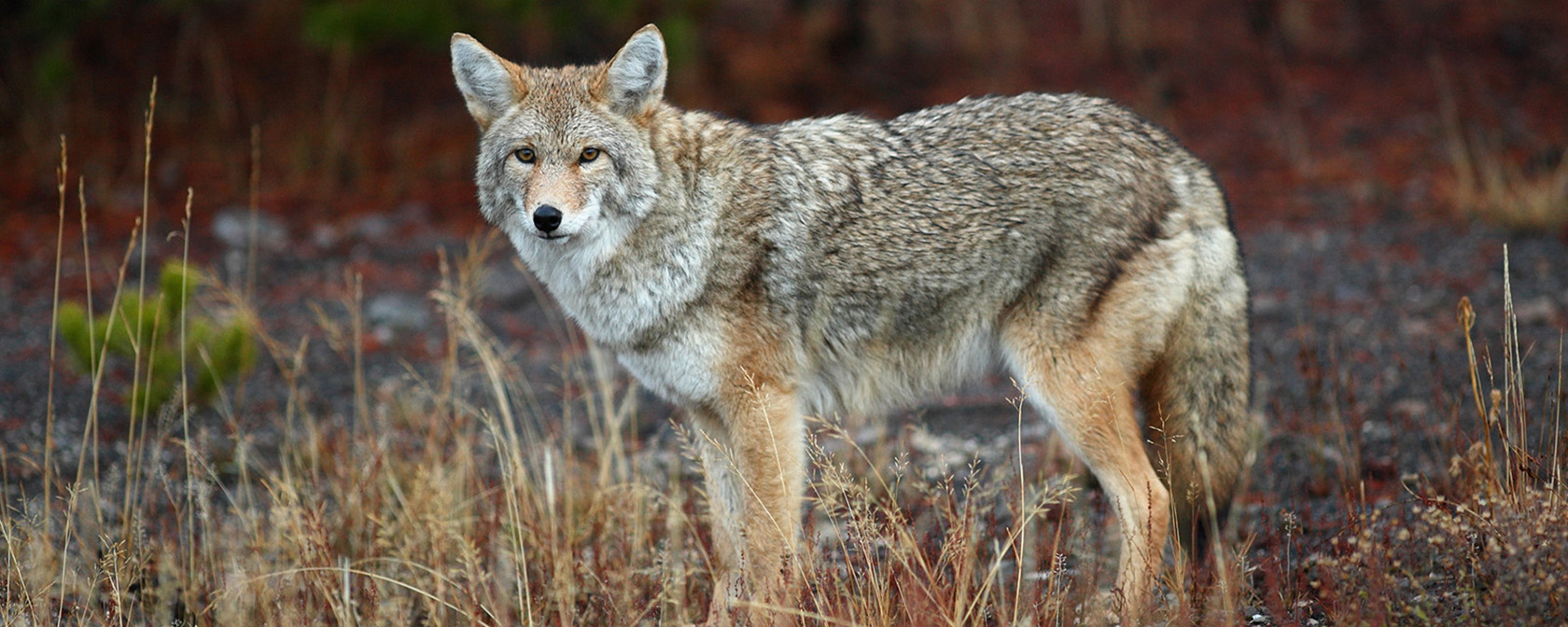
Over the years, as a weapon of choice for the U.S. Department of Agriculture’s Wildlife Services division, the M-44 has killed tens of thousands of wild animals. Although its primary targets are coyotes and foxes, the M-44 also kills animals it is not intended to harm including people’s pets—and it has poisoned or killed endangered wildlife species including wolves, grizzly bears and California condors. That’s not all. The M-44 is a clear and present danger to people, too, given its indiscriminate nature.
Those pushing for increased use of the M-44 have long benefited from the fact that our public policy discussions of killing methods for wildlife are notoriously underdeveloped in comparison with the animal welfare conversations that occur regarding animals in laboratories, animals used for food and companion animals.
Progress reversed, and animal welfare and public safety compromised
While the Biden administration’s record on wildlife issues was weak in many ways, it did get this one right. In 2023, it discontinued the use of the M-44 on the more than 245,000 million acres of land administered by the BLM. This prohibition arose from anticipated bans or use-limitations in a handful of states, including California, Idaho, Oregon and Washington, as well as a 2017 incident in which an Idaho boy was injured and his pet dog killed after the accidental triggering of an M-44 on public land near their home.
For close to a decade, we’ve seen real momentum in the campaign to eliminate the use of the M-44. Now, that progress is being reversed by the Trump administration with its April 2026 memorandum of understanding between the BLM and the USDA. While the MOU doesn’t explicitly authorize or expand the M-44’s use, it does identify restricted-use pesticides, including the M-44, as tools that can be considered for use under existing laws and statutes, with the BLM evaluating proposals on a case-by-case basis.
Just a few weeks after the MOU’s release, language in the report that accompanied the FY2027 USDA appropriations bill directed the agency to fully integrate the M-44 into its wildlife damage management strategy. This makes the case quite clear. Between this appropriations language and the agency memo, the M-44 appears to be on its way back to routine use.
A failure of imagination and of policy
It is a shame that an administration that has so strongly embraced the need for a paradigm shift regarding the use of animals in research and testing would so thoughtlessly fail to embrace new ways of thinking about managing wildlife species including wild carnivores like coyotes. In the same way that the federal government has pressed for a multi-agency road map to replace animal tests with non-animal methods, it needs to develop and pursue a research and policy agenda to replace the worst wildlife killing methods with more humane and ecologically informed approaches.
This failure involves more than the government’s reliance on crude and ghastly killing tactics. It’s also the conspicuous failure over many years to implement conflict reduction frameworks that decisively engage ranchers, farmers, government officials and residents in areas where wild carnivores and domestic grazing animals are present. Nonlethal methods for wildlife conflict issues should be the default, and the use of diabolical killing tools the last resort.
That’s why, in the end, this involves a failure of will, too. The science of animal welfare has been a recognized discipline for more than half a century now. Our deepened understanding of animal behavior and animal sentience, and our changing attitudes about the relative humaneness of certain methods used for killing animals, should be at the heart of wildlife management policy. But they aren’t, and the M-44 is the very embodiment of this heartlessness. It is a weapon of terror and extreme violence, and in the world we envision—the world we’re trying to create—there can be no place for it.
Kitty Block is president and CEO of Humane World for Animals.