By Sara Amundson and Kitty Block
In August 2025, at a dog breeding operation in Missouri, a husky mix named Masterpiece got sick with diarrhea and appeared weak. The owner of the facility, who is licensed under the U.S. Department of Agriculture, simply killed him.
In response, the USDA suspended the breeder’s license in January for just 21 days. Now the license is active again.
This is the kind of ongoing cruelty and indifference toward animals we are constantly fighting. Every year we issue our Horrible Hundred report to expose puppy mills across the U.S. Our new report speaks for Masterpiece and all the other dogs who are suffering—or even dying—at the hands of a wholly legal and licensed industry permitted to sell its dogs to pet stores and online.
This year’s report included more than 20 breeders who have sold puppies to Petland—the only national chain of pet stores in the U.S. that still sells puppies—and have repeatedly been exposed for cruelty. Many other breeders in the report put their puppies up for sale on social media and on websites, such as Puppies.com, GreenfieldPuppies.com and LancasterPuppies.com, to families who don’t even meet their puppy in person prior to purchase.
These states have high numbers of puppy mills.
For the 14th year in a row, Missouri has the highest number of bad breeders in the report. Missouri is followed by Wisconsin, New York, Pennsylvania, Kansas and Ohio. These higher numbers generally indicate the states have a glut of commercial breeders but can also indicate an enforcement program that needs more funding and support. States with a stronger enforcement program often produce more documentation than states with no enforcement.
Our Stop Puppy Mills team scours state, federal, court and other records to bring these stories to light so that the public can understand the truth behind puppy mills.
At a licensed Missouri puppy mill, Hidden Valley Farms, which sold puppies to Petland, a dog named May May was found staggering; others were thin, and a French bulldog named Pebbles was found alive but “unresponsive.” We know the sad fate of Masterpiece, but so often it is impossible to know what happens to the dogs in the puppy mill system—the reports offer only fragments of their stories.
The Horrible Hundred report helps to give a voice to dogs who can’t speak for themselves.
For 14 years, we have published our Horrible Hundred report not to “name and shame” breeders but to shine a light on a pervasive and systemic cruelty to dogs. What puppy mill dogs are forced to endure most dog lovers would agree is unacceptable.
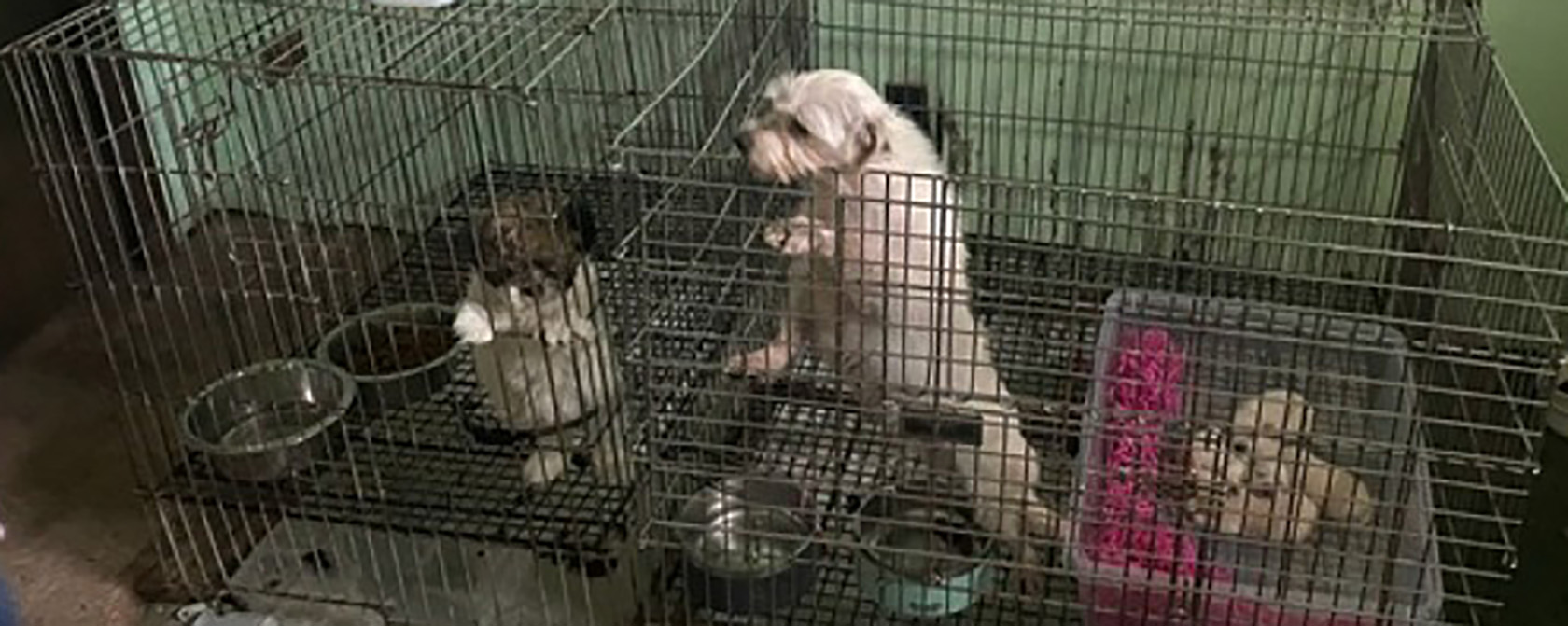
The details attest to the urgent need for stronger laws and enforcement efforts to address inhumane commercial dog breeders across the country: Underweight mother dogs with their ribs showing. Dogs in bitterly cold temperatures with only frozen water to drink. A lethargic puppy who was injected with a medication formulated for farm animals instead of being taken to a veterinarian.
Here are some specific details we uncovered and feature in the new report:
- Authorities reported a Pennsylvania breeder, Chester View Kennel, for suspected animal cruelty after the breeder used tight “rubber ligature[s]” in an attempt to “dock” puppies’ tails, but the breeder appears to be operating as of April 2026.
- A dog was found dead of apparent hypothermia at a breeding kennel in Nebraska, Sandhills Dachshunds, in December 2025.
- A dog at Happy Canine Kennel in Wisconsin had such a severe injury to his eye that the eye had to be surgically removed.
- An inspector visiting Bow Wow Mound Kennels in Kansas was so overcome by strong odors that their eyes, nose and throat had a burning sensation and they had to flee the building to use an inhaler; the kennel had sold puppies to Petland.
The public has a right to know what happens at puppy mills.
This is the status quo: Behind closed doors at puppy mills, mother dogs are forced to breed and birth litter after litter until their bodies are exhausted. Their pups are treated as commodities to feed an industry that takes advantage of people’s love for animals. Some pups from puppy mills suffer from lifelong health or behavioral problems, stemming from the deprivation of their early puppyhood. Most of the puppy mills in the Horrible Hundred report are state or federally licensed, and many sell dogs to pet stores like Petland.
The Horrible Hundred report is making a difference.
In past years, after our Horrible Hundred report has come out, some of the largest puppy mills that appeared in these reports closed and/or were significantly fined or criminally charged. These and other closures brought the total of animals rescued from Horrible Hundred breeders over the years to more than 3,330.
We continue to press authorities to take stronger action against repeat offenders and to enact tougher policies to prevent poor conditions at commercial pet breeders from escalating into animal cruelty.
You can also make a difference for dogs.
Eight states and over 520 localities prohibit the sale of puppy mill puppies in pet shops, and we’re working with several other states and cities on enacting this policy as we write this. This crucial work is a blow to cruel puppy mills, but it doesn’t replace the need to crack down on the mills themselves. That’s why we are pushing for federal solutions, too.
There are two bills that would better the lives of dogs at puppy mills in the U.S. The Puppy Protection Act would improve the quality of life of dogs in USDA-licensed breeding facilities by requiring stronger standards of care including increased enclosure sizes, solid flooring, exercise, feeding twice per day, socialization, increased veterinary care and protection from extreme temperatures. It would also impose breeding limits and ensure that breeders make reasonable efforts to rehome retired dogs instead of discarding or killing them.
Pass the Puppy Protection Act >>
The Better Collaboration, Accountability, and Regulatory Enforcement (CARE) for Animals Act would amend the Animal Welfare Act to enhance the enforcement capacities of the U.S. Department of Justice and reinforce multi-agency collaboration between the DOJ and the USDA. This will make it easier to shut down problematic breeders licensed under the USDA for good.
Pass the Better CARE for Animals Act >>
We can end the cruelty of this industry but we must all come together to raise awareness of the plight of puppy mill dogs and call on lawmakers to take action. You can also share this information with your family and friends, urging them to never buy a dog or cat from a pet store or online. Together, we can create a world in which dogs are treated as companions, not commodities.
Kitty Block is president and CEO of Humane World for Animals.