By Sara Amundson and Kitty Block
In a cruel step backward, the U.S. Department of Agriculture has proposed changes under the Horse Protection Act that would basically abandon Tennessee Walking Horses and related breeds to their abusers.
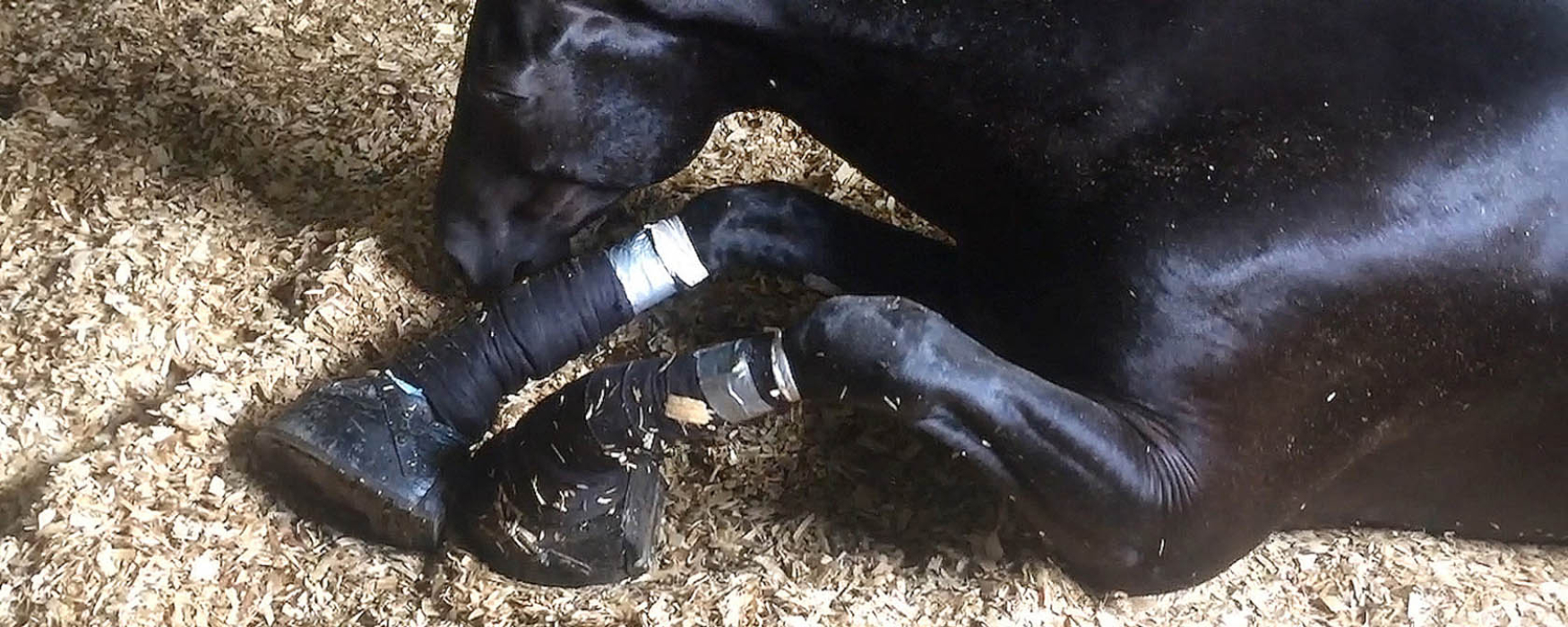
Over 50 years ago, Congress passed an historic law to stop horse soring—the deliberate infliction of pain on horses’ legs and feet to force an exaggerated gait known as the “Big Lick”—all for the sake of winning ribbons at some horse shows. Yet enforcement of the Horse Protection Act has repeatedly been entrusted to organizations operated by the very industry being regulated.
Now, the agency proposes to abandon the system of independent inspections it adopted just two years ago—before the system was ever implemented. What the agency proposes to return to is leaving enforcement to horse industry organizations.
It’s said that insanity is doing the same thing over and over again and expecting different results. If the Trump administration expects this system to work for the protection of horses, the USDA’s move is nothing less than insane; if it doesn’t, it is nothing less than a betrayal of horses and the law.
There is still time to stop this. In a short 30-day comment period, the public can speak up for the horses who cannot speak for themselves.
The failed inspection scheme that protects horse abusers
The USDA's own Inspector General recommended eliminating the horse industry’s system of self-policing in 2010; the USDA agreed then to make the change. The National Academies of Sciences, Engineering, and Medicine reached the same conclusion in 2021.
Our 2022 undercover investigation showed how badly self-regulation fails. We documented horses given sedatives before inspection to suppress pain responses and more injections afterward to reactivate the pain so they would perform the exaggerated gait in the ring. Yet leadership in the Tennessee Walking Horse show circuit did not denounce the abusers. They closed ranks and celebrated them.
This and other signs make it clear that more effective federal regulation is in no way an act of overreach. It is necessary for ensuring the safety and welfare of horses. But instead, the USDA is proposing to keep responsibility for licensing and overseeing inspectors with horse industry organizations. While there are a few tweaks, like adding federal training and some other restrictions on paper for individual inspectors, the USDA misses the big picture—the need for a wholly independent inspection system.
Even scientific testing would operate substantially under industry control
The USDA's proposal also includes requirements for blood testing and chemical swabbing to detect drugs and substances used to conceal soring. These are important tools that have already been employed intermittently over the years, but there is a glaring problem: The USDA would allow horse industry organizations to develop key testing procedures, sampling methods and thresholds, subject to agency approval.
This approach is completely out of alignment with successful compliance testing in other sports that recognize the importance of independently administered drug testing. And the USDA has its own evidence of widespread medication abuses and the failures of past industry-run testing programs for horse soring. It plainly doesn’t make sense for the agency to leave critical testing decisions in the hands of those industry organizations whose members have been among the most flagrant scofflaws when it comes to the discreditable practices that have so stigmatized the Tennessee Walking Horse for decades.
Further changes would make it harder to keep sore horses out of the show ring
Not only will the changes keep industry insiders as inspectors, but when the USDA is actually present and performing inspections at shows, two agency veterinarians will need to independently agree that there are alleged violations of the law, and agree on the reason why, before notifying show management of the finding. Even when both agree, owners would then be able to appeal to a third entity before the horse is disqualified—an “Appeals Official” who could issue the final word orally at the show grounds.
All this, when we know that USDA veterinarians tend to find substantially more violations than industry inspectors, and that industry inspectors find far more violations when USDA personnel are present. This adds to the evidence that industry-controlled inspections fail, not least because they are inferior to agency inspections. It is plainly shameless that the USDA would undermine its own authority in this way.
The proposal also leaves chains, stacked shoes and other devices associated with soring in place, rather than developing more effective restrictions to address the risks this equipment presents. And horses found sore in one class could be presented for inspection again before another class at the same event, though the Horse Protection Act clearly prohibits the showing of a sore horse, and the USDA itself acknowledges that this could encourage further use of sedatives and masking agents to make a sore horse appear not in pain.
All told, this proposal is a disaster for horses—and a waste of years of work to protect them. We have been through decades of rulemaking, litigation and other attempts to repair this broken system. We have repeatedly gone to court over the USDA’s failure to provide effective, independent enforcement. We would never give dogfighters or cockfighters this influence over enforcement of federal law intended to stop their cruelty. Big Lick participants should not receive special treatment.
Horses deserve independent enforcement. Americans deserve a system designed to work to prevent animal cruelty—not another attempt to make industry self-policing respectable.
You can join us in urging the USDA to change its course on horse soring.
Kitty Block is CEO and president of Humane World for Animals.