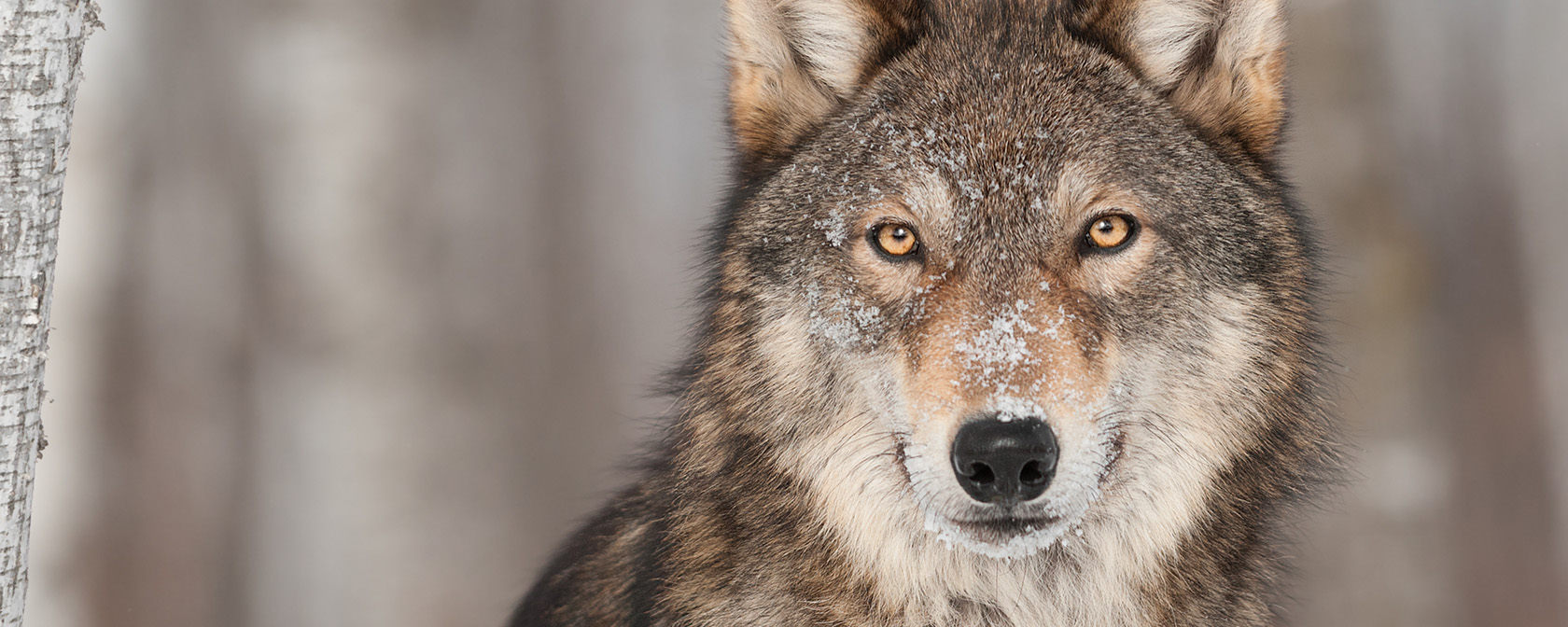
With the advancement of the House Appropriations Committee’s FY 2027 Interior-Environment Appropriations bill on a 35-27 vote, we’ve reached a new stage in the war on wildlife. There are no less than 20 anti-wildlife policy riders in this noxious package, including proposals to delist gray wolves and grizzly bears from the Endangered Species Act, which would push these already vulnerable species closer to the brink of extinction.
Even with a few bright spots, for example on wild horse and burro management and on animal testing, this bill is an unmitigated disaster.
Unfortunately, the bill now moves to the House floor, and we’ll have to take it down there. You can do your part by urging your congressional representative to oppose each and every one of these poison pill riders that threaten the survival of some of the nation’s most imperiled species.
You can help by urging Congress to act now to protect wildlife
Protect wildlife in the Interior Appropriations bill >>
We expect the Senate to present its own Appropriations package later in June, and we’re working right now to exclude such dangerous proposals from that version.
Perhaps the most disturbing elements of the package are riders that would directly delist gray wolves in the lower 48 and grizzlies within the Greater Yellowstone and Northern Continental Divide ecosystems and prohibit judicial review of such actions.
Other lowlights in the bill include its blocks on protections for wolverines, Northern Spotted Owls, Canada lynx, sage-grouse, the lesser prairie-chicken, the northern long eared-bat and seven Texas Freshwater mussels.
The bill also seeks to upend critical ESA regulations. Most notably, it would effectively overturn the U.S. Fish and Wildlife Service's blanket 4(d) rule which is critical to the defense of threatened species. Without it, threatened species could be killed, harassed or otherwise harmed by default. The bill would also undermine the ESA process for listing species and protecting their habitat, and severely restrict regulation of lead ammunition and tackle on public lands, a move which will put wildlife and humans at further risk of lead poisoning in the future.
Another worrying provision directs the Bureau of Land Management to align with U.S. Department of Agriculture’s Wildlife Services program regarding the use of predator control methods on BLM public lands.
One of the clearest signs of the hostility to wildlife protection of those who approved this package are its steep funding cuts. Funding for the USFWS and the BLM has been cut by some $89 million and $48 million, respectively, from approved FY 2026 levels. As for ESA management, that’s been slashed in half from last year’s level, and now stands at $7.4 million for FY 2027.
In the report, the Committee also included language highlighting some members’ concerns regarding environmental lawsuits brought by non-profit organizations and other parties, including those impacting ESA decisions. The report directs the Department of the Interior, the EPA, and the U.S. Forest Service to provide detailed reports on the amount of program funds paid out; the names of the fee recipients; the names of the federal judges who presided over litigation; the disposition of the applications (including any appeals of action taken on the applications); and the hourly rates of attorneys and expert witnesses involved in any lawsuits.
On the positive side of the ledger, we are of course pleased to see the bill’s retention of longstanding language to protect wild horses and burros from slaughter, because they do not deserve that fate. We fought hard for the right outcome against prevailing winds again this year. Thank you for answering the call to action to help keep these much-needed protections in place.
And we were delighted with the Committee’s support of the Environmental Protection Agency in its ongoing efforts to reduce animal testing. The bill includes first of its kind language to prevent the use of dogs for pesticide and chemical testing (largely the remit of the regulated industry and not funded by the federal government). Congress has focused attention in recent years on animal testing conducted by federal agencies; this is quite a different approach, with the agency refusing to accept data generated by chemical manufacturers relying on tests with dogs. Moreover, the Committee report directs the agency to take further steps to reduce and replace the use of vertebrate animals in the testing of chemical substances with scientifically justified alternative test methods, to meet its previously stated deadline of 2035 for doing so. The EPA was also encouraged by the Committee to coordinate with other relevant federal agencies, as appropriate, in implementing this phase out to avoid duplication of efforts and resources. We urge the establishment of an interagency task force to include EPA, the U.S. Food and Drug Administration and the National Institutes of Health to further advance the transition to non-animal methods and collaborate to share resources, data and direction to regulated industries.
The outcomes for wild horses and burros and alternatives to animal testing are very good, and we’re grateful to see them in the package. Still, it must be said, they provide little comfort in the midst of what has become, in this congressional session, a full-scale assault on the nation’s cherished and endangered wildlife species.