By Sara Amundson and Kitty Block
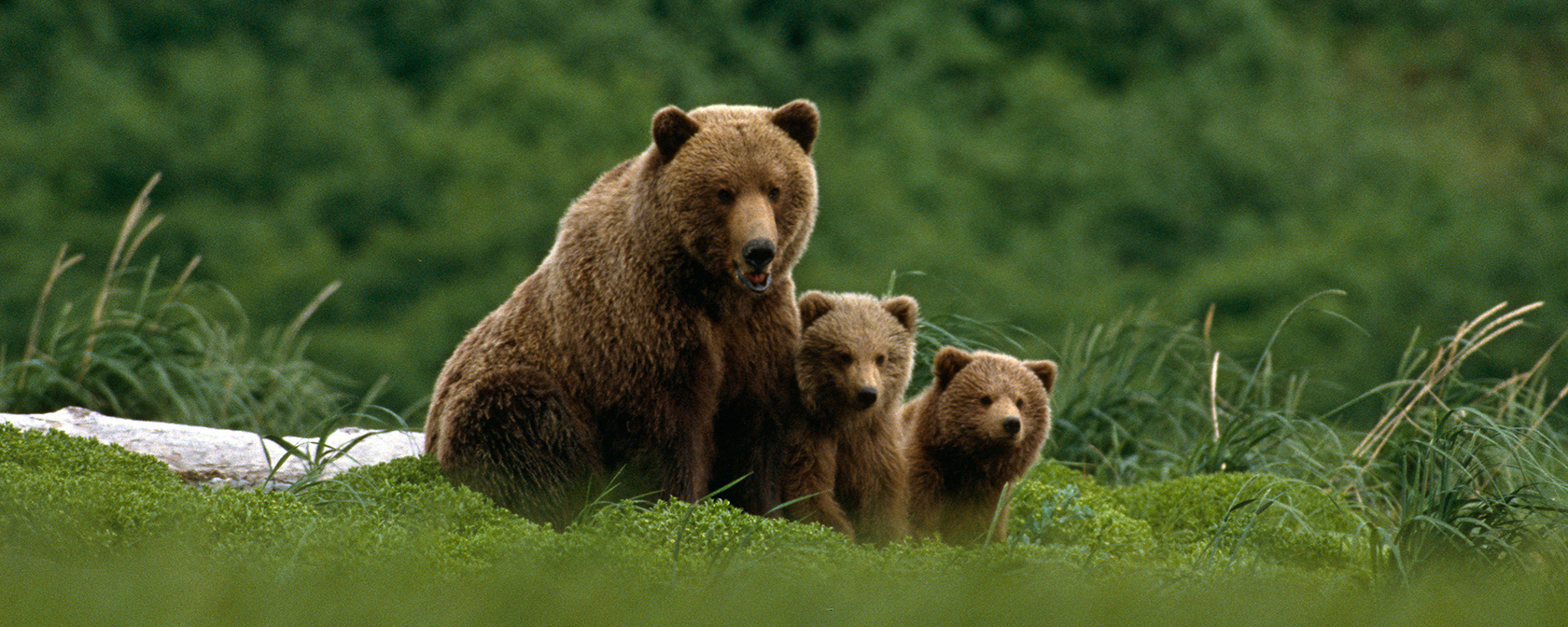
This week, the U.S. Fish and Wildlife Service proposed to change Endangered Species Act protections for grizzly bears in the Lower 48 states, while leaving open the door to a future proposal to delist the species from federal protections.
Let us be clear: we cannot allow the U.S. Fish and Wildlife Service to remove federal protections from grizzly bears right now. Even within the context of the Trump administration's full-throated assault on the nation’s wild species and their habitats, stripping the grizzly bear of federal protections and oversight would be an affront.
At least three polls since 2020 confirm the American public’s broad support for the protection of grizzlies. A January 2025 survey found that supermajorities of Americans—including rural residents of Idaho, Montana, and Wyoming, as well as conservatives, hunters, ranchers and farmers—support continued federal protections for grizzly bears under the Endangered Species Act. A 2022 poll showed that 76% of voters oppose trophy hunting, and 73% specifically oppose grizzly bear trophy hunting. A 2020 Montana survey found that 92% of residents believe grizzly bears have a right to exist.
Keep grizzly bears protected!
The announcement came at a joint press conference on Tuesday with Secretary of the Interior Doug Burgum and the governors of the three Northern Rocky Mountain states, the states most committed to the removal of federal protections for grizzly bears.
The event seemed hastily arranged and organized, and at times the participants seemed to contradict one another on particulars. But there were some clear takeaways. One was the desire of the federal government to transfer management of grizzly bear populations back to the states, a move that concerns us deeply given their extremely poor track records when it comes to grizzly coexistence, and their drastic, deadly and unscientific management of wolves.
While Brian Nesvik, director of the U.S. Fish and Wildlife Service, commented that the decision does not “change the listing status of the bear,” other speakers said that grizzly bears were ready to “graduate” from the Endangered Species Act list and falsely suggested that the species had “recovered” from the killing campaigns that almost wiped them out.
There is plenty to parse in the remarks of the governors, the Interior Secretary and Director Nesvik, but the announced action reinforces the big picture impression of an administration (and regrettably, a Congress) that wants to kill the Endangered Species Act through a “death by a thousand cuts” strategy.
In the proposed rule, the Service announced its intention to establish a tiered system of state-run grizzly bear management, with seemingly little federal oversight or public participation. While the details s remain murky, we know for a fact that the proposal will permit more bears to be killed and that state management of grizzly bears, especially with limited oversight from the public, is a threat to the species’ survival. It could set up Lower-48 grizzly bears for extinction in the wild.
There are only about 2,000 grizzly bears left
Grizzly bears in the Lower 48 live in small, segmented and isolated populations in the Greater Yellowstone Ecosystem, the Northern Continental Divide (the Glacier National Park-based population), Cabinet-Yaak and Selkirk ecosystems. Only about 2,000 survive today (down from an estimated 50,000 two centuries ago), occupying just 6% of their historic range.
Any governor, congressman, cabinet secretary or agency official who tries to make the case that grizzly populations are currently large enough and can sustain increased mortality is overlooking the facts. The Greater Yellowstone Ecosystem population, for example, with perhaps only 1,000 individuals, should be three to seven times greater to ensure genetic health and resilience in an era of significantly increasing drought and wildfires. Despite decades of recovery efforts, no safe wildlife corridors currently connect the Greater Yellowstone and Northern Continental Divide populations. Without continuing protections and the establishment of secure ecosystem corridors, grizzly bears face genetic isolation and long-term decline.
Grizzly bears also reproduce slowly. Females reach maturity around age 6, produce an average of two cubs per litter, and may only reproduce every three or more years. Mothers spend three to four years raising, nurturing and protecting their cubs from a nearly endless list of threats. It can take a decade for one female to replace herself in the population.
On top of all this, grizzly bear food sources once plentiful have declined in recent years. Whitebark pine, once a dietary staple, is now a threatened species itself. Invasive lake trout have displaced native cutthroat trout. Severe drought and fire—now the norm in the West—reduce the availability of berries and other plants. These losses have been documented by biologists as detrimental, increasingly forcing bears to leave protected areas in search of food, sometimes leading to their deaths.
Grizzly bears are more valuable alive than dead
Grizzlies are valuable not only to their ecosystems, but also to the economy. The worth of grizzly bears to regional tourism blows away any rationale for allowing trophy hunters or anyone else to kill them. Wildlife watchers and other tourists flock to national parks to view these bears, stimulating local economies. Economists from the National Park Service and the U.S. Geological Survey found that grizzly bear sightings account for $6.9 million dollars in regional tourism dollars every year.
But grizzly bears must be alive to continue to support these gateway communities. Their loss would tank these benefits as wildlife viewing opportunities decline and cost local economies dearly—billions of dollars annually—in lost tourism revenues.
Removing Endangered Species Act protections won’t achieve the benefits for ranchers and farmers some officials claim it will. Government data confirm that conflicts between grizzly bears and farm animals are extremely rare. In the Northern Rockies, grizzlies account for fewer than 1% of total farm animal deaths. U.S. Department of Agriculture data show that ranchers lose nine times more cows and sheep to health issues, weather, birthing complications and theft than to all cases of deaths to carnivores combined.
Non-lethal tools and techniques have proven to be the best methods for protecting farm animals from the risk of an incredibly rare encounter with wild carnivores. And in human-dominated areas, people can secure food attractants, especially garbage and bird feeders, from drawing in bears in the first place.
A lot of special interest groups are lurking in the shadows and pushing for the removal of endangered species protections for grizzly bears and for the obliteration of the Endangered Species Act itself. And they, not the wildlife biologists and other professional scientists, are the ones who seem to have the ear of the Secretary of the Interior and the governors. Rather than working to forge a future in which grizzly bears roam freely across connected landscapes, where science—not politics—guides wildlife policy, and where coexistence replaces conflict, a handful of political leaders are choosing to undermine all these outcomes. This indifference to grizzly bears and their future, and to the views of the millions of Americans passionate about protecting them, has put the nation on the wrong course, and we shouldn’t let them get away with it.
Kitty Block is president and CEO of Humane World for Animals.