By Sara Amundson and Kitty Block
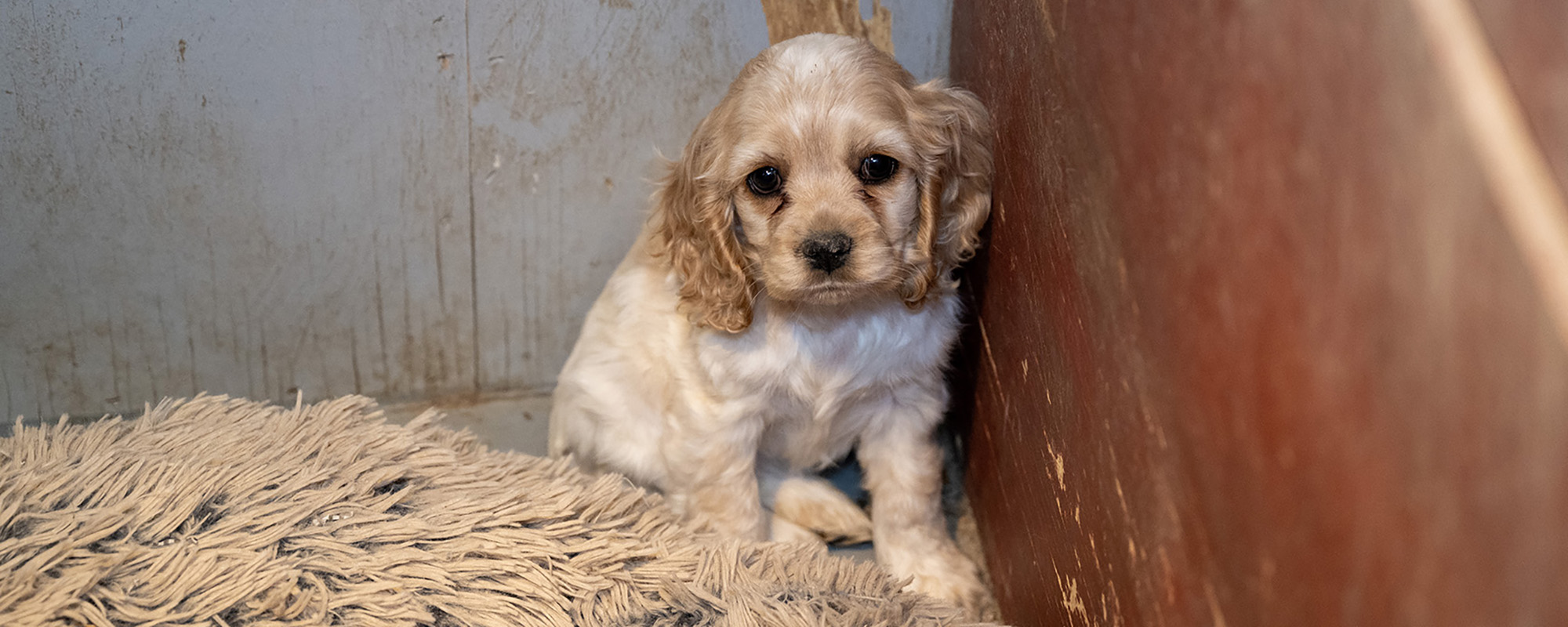
In late April, we released our annual Horrible Hundred report on puppy mills, exposing one hundred puppy mills across the U.S. More than half of these breeders were licensed by the U.S. Department of Agriculture, the agency tasked with upholding standards of care at many animal facilities, including commercial dog breeders, under the Animal Welfare Act.
Then, within just 30 days of the report’s publication, the USDA took action against 9 of the dealers we featured.
We have not seen this much action taken against dog breeders within such a short period of time in quite a while.
Here are the specific steps the USDA took:
- Revoked the licenses of two dealers in Missouri. Marjorie Walker/Price’s Pets had appeared in our report for the fifth time, and Teresa Rauch/Ratepa Kennels for the third time.
- Denied a license renewal to one dealer, Clyde Horst of Red Barn Kennel in Wisconsin, who appeared in our report for the first time.
- Temporarily suspended the licenses of three dealers: Eva and William “Junior” Yutzy of Wisconsin, who appeared in the report for the third time, Clemens and Lizzie Borntreger of Kansas, who had appeared in our report for the first time, and Patty and Mike Talcott in Indiana, who had appeared in our report for the second time.
- Issued Official Warnings to three dealers in our report: Kimberly Olson (Iowa), Shannon DeKoning (Kansas) and Raymond J Yoder (Ohio).
This overall response leads us to be hopeful about the promise the agency made earlier this year about coming down hard on chronic violators of dog welfare.
In February, the USDA joined several other federal agencies to announce a coordinated effort to crack down on chronic dog welfare violators. USDA Secretary Brooke Rollins said: “If you are breeding dogs and not meeting the Animal Welfare Act’s humane standards of care, your time is up.”
The announcement was met with hope, as well as skepticism about whether this could be just a warm and fuzzy P.R. move. But, in addition to the actions taken against Horrible Hundred breeders above, the USDA has made other progress on dog facilities, as well.
First, the USDA’s Animal and Plant Health Inspection Service announced a Request for Information that same week, soliciting comments regarding “standards for the care of breeding female dogs at dog breeding facilities and exercise and socialization of dogs subject to the Animal Welfare Act.” We sprang into action, submitting detailed recommendations on canine welfare improvements based on science. We also mobilized the public; almost 49,000 comments were sent to the agency in support of stronger standards of care.
To be sure, many of the horrific puppy mills in our report are still operating despite histories of mistreating animals and are still USDA-licensed. But it’s worth giving credit where it’s due.
Whether the momentum in the agency’s action against problem puppy mills is just beginning, or is a short-lived burst to allay recent criticisms, remains to be seen. But we are hopeful that America’s love for dogs will continue to spark further commitment at the agencies in charge of this effort.
Protect dogs from cruel puppy mills >>
The USDA can continue the momentum by:
- Releasing official rules strongly enhancing dog care standards.
- Cracking down on the shell game of license renewals, wherein licensees with a problematic history voluntarily cancel their licenses, only to have a close associate or family member acquire a new license on the same property with the same dogs days later.
- Working with the U.S. Department of Justice and/or local law enforcement officials to report suffering animals documented during USDA inspections. This could have helped, for example, a “severely underweight” poodle who was found at two consecutive inspections at a breeder in Ohio. The USDA temporarily suspended the breeder’s license in April but apparently did not seize the animal. It is unknown if she survived.
- Revoking the licenses of dealers who repeatedly refuse or avoid inspections, such as Mr. Cervantes at Verified Puppy, New Prague, Minnesota, who was in our Horrible Hundred report for becoming vulgar and belligerent with USDA inspectors and refusing to allow inspections. USDA inspectors have not returned to this facility since June 2025.
- Working more closely with states that inspect commercial breeders, such as Missouri, where the state inspectors have found repeated, significant violations at several breeding operations that the USDA has not cited nor even visited in a year or more.
- Making a concerted effort to license and regulate more online pet sellers who are evading licensure.
Our teams put a lot of work into the Horrible Hundred report, and we are glad to see signs of the USDA’s seriousness about cracking down on puppy mill cruelty. When you support our work, you are supporting a comprehensive approach, one that combines investigation, interaction with agency officials, public awareness efforts and public policy reform. The animals deserve nothing less.
Kitty Block is president and CEO of Humane World for Animals.