By Sara Amundson and Kitty Block
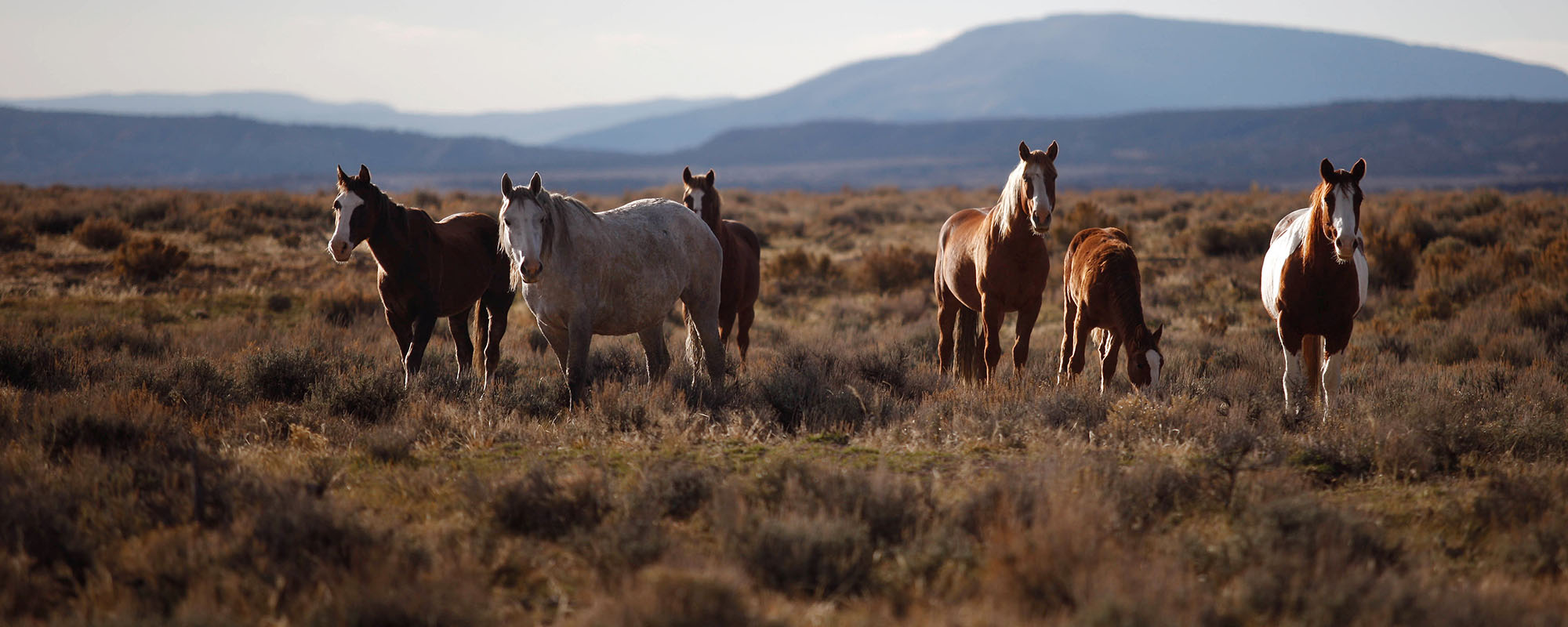
This week, the New York Times reported that several hundred of America’s wild horses have been sold to slaughter, in a total betrayal of public trust, congressional direction and the historic legislation that first set the stage for their protection in the mid-twentieth century.
Tragically, this isn’t the first time that the Bureau of Land Management has fallen down on the job. The BLM is the primary agency tasked with the responsibility to manage these majestic animals, who live on public lands, and to ensure that the wild horses and burros who are rounded up go to reputable homes. Instead, the agency has set the stage for their betrayal and deaths.
To say the least, it is ironic that in the middle of celebrations surrounding the 250th anniversary of the United States, we’d witness agencies of the federal government putting some of the country’s most celebrated animals at such a risk.
It’s happening at the U.S. Fish and Wildlife Service, which is actively pushing for downgrades in protection for grizzly bears and weakening the regulations that support the Endangered Species Act, a landmark law protecting thousands of imperiled species.
And it’s happening at the BLM, even though the agency is responsible for ensuring that wild horses and burros removed from public lands for whatever reason find safe and suitable lifetime placement. Instead, the BLM appears to be administering a system that allows horses to slip through the cracks and go to their deaths in violation of congressional prohibitions on their slaughter.
The latest moral and practical failure for wild horses
In 2025, about 3,700 wild horses were sold, more than double the number sold in past years, according to the Times. That’s a significant rise in the number of sales of these horses and burros. Ohio livestock trader Brandon Jones reportedly acquired about 500 wild horses from the BLM; it appears that he sold many of them for slaughter through clandestine contacts and channels.
The article suggests the BLM approved his application to acquire these animals despite warning signs.
This isn’t the first time the Trump administration has turned its back on wild horses
The BLM recently introduced sales policies that attempt to discourage efforts to profiteer in the selling of wild horses for slaughter, and greater room for law enforcement officials and other parties to go after those individuals who continue to flaunt the basic assumptions of its management remit.
However, these efforts by the BLM are overshadowed by the administration’s other actions. The Trump administration's FY26 and FY27 Budget requests to Congress proposed the elimination of appropriations riders that are in place precisely to prevent the killing and slaughter of wild horses and burros. Year after year, we have successfully maintained these riders, but even now, with the Senate appropriations bill not yet released, the fate of wild horses and burros remains uncertain.
Protect wild horses and burros >>
This is especially frustrating because we have been working for decades to support reform and change at the BLM, on the one hand, and to stymy the efforts of the horse slaughter industry and “kill buyers” who seek to profit from sending horses into the slaughter pipeline outside the U.S. We have also worked on wild horse and burro fertility control programs.
Year after year, we have lobbied and litigated to end the horse slaughter trade, and year after year, we have made sure that congressional appropriations language is in place to prevent the BLM from selling horses in a manner that leads to their slaughter. And gladly, willingly, we have welcomed horses from the BLM program to our sanctuary, Black Beauty Ranch, where they are not only thriving but serving as living reminders of the great good we can all do to honor and protect them.
It is impossible to make horse slaughter humane
To some degree, the fact that it is impossible to make horse slaughter humane has become a neglected point in the debate over the fate of wild horses and burros. But it’s still true. The lack of transparency and questionable horse deals described by the New York Times are not unique to wild horses. Thoroughbreds, Standardbreds, Amish horses, backyard horses and others can disappear into the same opaque network of dealers, brokers, auctions and intermediaries. That opacity shows why prohibiting transport to slaughter is essential: Horses should not be able to disappear through a chain of dealers and intermediaries on their way to a slaughter plant.
In the slaughter pipeline, horses are shipped for more than 24 hours at a time without food, water or rest in crowded trucks. They are often seriously injured or killed in transit. Slaughter is a brutal and terrifying end for horses.
Congress can end the slaughter of America’s wild horses
The BLM must take immediate steps to ensure that no horses adopted or sold under their program end up in slaughter.
It’s equally, if not more important, that the U.S. Congress do its part. Congress has missed several opportunities over the years to ban the export and killing of horses and burros permanently. And we have to wonder why. Americans don’t want American horses sold for export and slaughter. There is no partisan divide involved here, no massive economic interest, and no risk of alienating major voting blocs.
The time for Congress to take action is way overdue.
Speak out to end horse slaughter>>
It’s up to all of us to ensure that the administration hears our calls to action—it’s up to all of us to ensure that Congress makes this the last time America’s wild horses undergo the immense terror of suffering of transport and slaughter.
Even one wild horse or burro slipping through the cracks is unacceptable. But hundreds or thousands of them being sent to slaughter is a travesty.
Stand with us and ask your lawmakers to protect wild horses and burros from slaughter.
Kitty Block is president and CEO of Humane World for Animals.